free Worldwide shipping - try 30 days risk-free

Role of Mod Parts in Watchmaking: Shaping Modern Craft

Choosing the right part can turn a simple watch into a statement piece that stands out in any collection. For enthusiasts chasing custom style without emptying their wallets, understanding modular watch components is the key to affordable luxury. As modern trends shift toward personalization and flexible watchmaking, this guide reveals how carefully selected mod parts reshape both aesthetic appeal and craftsmanship in Seiko builds and beyond.
Table of Contents
- Defining Mod Parts In Watchmaking Today
- Major Types Of Mod Parts And Their Functions
- How Mod Parts Influence Watch Design And Value
- Key Risks And Considerations For Modding
Key Takeaways
| Point | Details |
|---|---|
| Understanding Mod Parts | Mod parts are interchangeable components that enhance customization of mechanical watches without redesigning the entire movement. |
| Categories of Mod Parts | Mod parts can be divided into visual components, mechanical upgrades, and functional upgrades, each contributing differently to a watch’s aesthetic and performance. |
| Risks and Considerations | Be aware of mechanical, financial, and technical risks in modding; proper planning can prevent costly mistakes and compatibility issues. |
| Value and Design Impact | Quality mod parts maintain the original movement’s integrity and enhance overall value, affecting both personal enjoyment and resale potential. |
Defining Mod Parts in Watchmaking Today
Mod parts are individual components or assemblies that can be swapped, upgraded, or customized within a mechanical watch without requiring a complete movement redesign. Think of them as building blocks—each piece serves a specific function, yet remains independent enough to be replaced or upgraded independently.
Unlike vintage watchmaking, which treated timepieces as sealed, monolithic units, modern modular watch design embraces flexibility. Modular watch movements and interchangeable components have transformed how enthusiasts approach customization, especially in the Seiko modding community.
What Qualifies as a Mod Part?
Not every component in a watch qualifies as a “mod part.” True mod parts share specific characteristics:
- Interchangeable design: Swap-compatible with multiple watch bases or configurations
- Independent function: Work autonomously without requiring additional modifications to the core movement
- Aesthetic or mechanical improvement: Either enhance appearance or mechanical performance
- Standardized interfaces: Fit established measurements and specifications
Common mod parts you’ll encounter in the Seiko community include cases, dials, hands, bezels, crystals, and occasionally entire movement modules. Each addresses a different layer of customization—from visual transformation to functional upgrades.
Historical Context Meets Modern Practice
Watchmaking has always involved component assembly, but classical watch construction treated most components as permanent fixtures. Modifiers have essentially reversed this philosophy, designing parts explicitly for removal and replacement.
This shift reflects a broader industry trend toward sustainability and personalization. Instead of discarding a watch when you want a different aesthetic, modern mod parts let you rebuild it.
Why the Distinction Matters
Understanding what constitutes a mod part helps you make smarter purchasing decisions. A quality mod part isn’t just a replacement—it’s engineered to maintain the original movement’s integrity while delivering the customization you want.
When you’re sourcing parts for your next build, this clarity prevents costly mistakes. You’ll know exactly what fits, what doesn’t, and why compatibility matters.
Quality mod parts preserve mechanical function while enabling aesthetic transformation—that’s the core principle behind successful watch customization.
Pro tip: Before purchasing mod parts, verify the specific movement generation and reference number of your base watch. This single step eliminates 90% of fitment problems and saves hours of frustration when assembling your custom timepiece.
Major Types of Mod Parts and Their Functions
Mod parts fall into distinct categories, each serving different purposes in your custom watch build. Understanding these categories helps you plan your modification strategy and source the right components for your vision.
The mod parts ecosystem divides cleanly into visual components, mechanical components, and functional upgrades. Each category transforms your watch in different ways, and many builds combine all three.
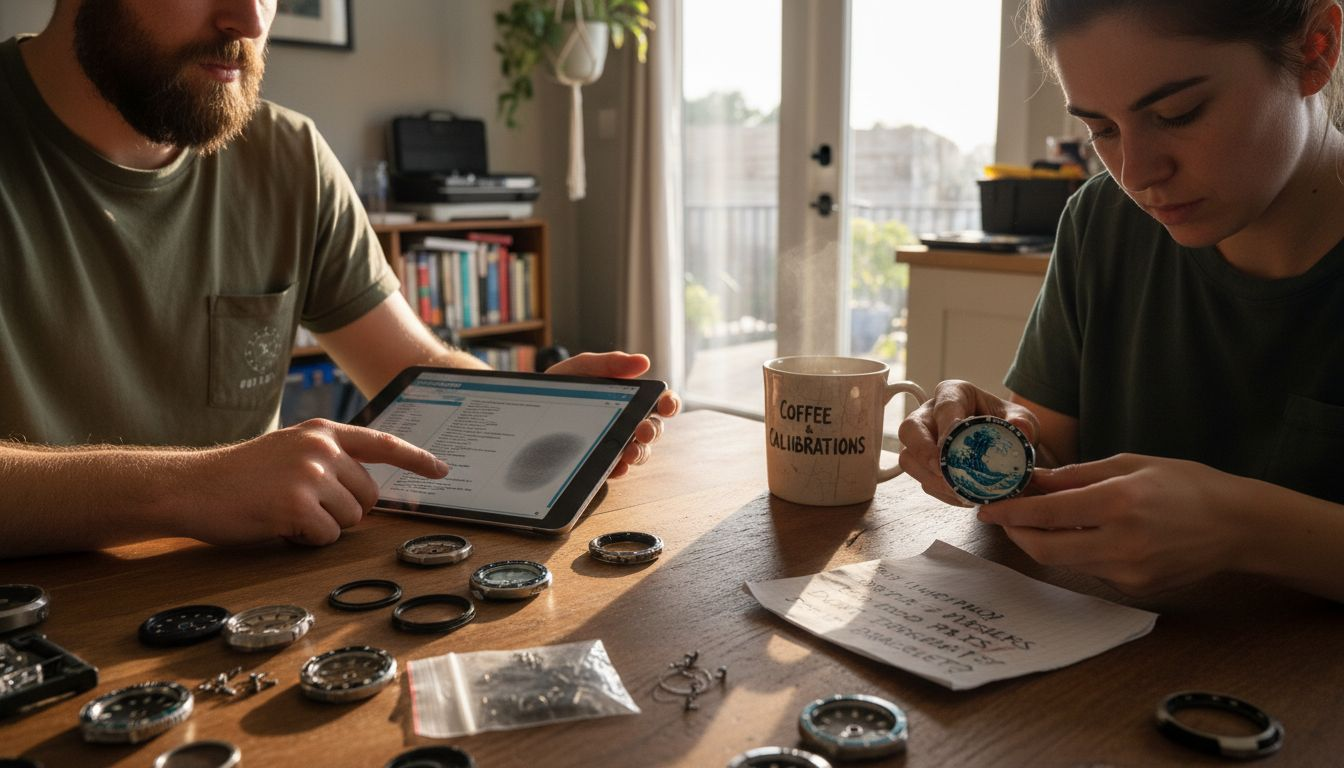
Here’s a quick reference to the main categories of mod parts and their real-world impacts:
| Category | Typical Uses | Skill Level Needed | Impact on Watch |
|---|---|---|---|
| Visual Components | Style and color changes | Beginner | Aesthetic upgrade |
| Mechanical Upgrades | Timekeeping performance | Advanced | Functional boost |
| Functional Upgrades | Added complications or lume | Moderate | Enhanced features |
Visual Mod Parts
These parts define your watch’s appearance without affecting how it keeps time. They’re the most accessible entry point for beginners:
- Cases: Transform the watch’s overall silhouette and size
- Dials: Control color, texture, and design language
- Hands: Shift the aesthetic feel instantly
- Bezels: Frame the dial and add visual character
- Crystals: Affect both appearance (domed vs. flat) and functionality (scratch resistance)
Visual parts offer the broadest creative freedom. You can swap a dial and bezel to completely reimagine a watch without touching the movement.
Mechanical Mod Parts
These components work within the movement itself, affecting how your watch functions. Advanced manufacturing techniques now enable production of intricate mechanical mod parts previously impossible to create.
Common mechanical mods include:
- Hands sets: Precision-engineered for exact centering
- Mainsprings: Improve power reserve or torque
- Gear trains: Enhance accuracy or complications
- Escapement components: Fine-tune timekeeping performance
These require more technical knowledge and precision fitting than visual parts.
Functional Upgrades
Some mod parts add entirely new capabilities. Lume applications brighten luminosity, while movement modules can add complications like date windows or GMT functionality.
The best mod builds blend visual appeal with mechanical reliability—aesthetics matter, but function keeps the watch ticking.
Sourcing Considerations
Not all mod parts work with all watch bases. Compatibility depends on movement type, case dimensions, and hand shaft specifications. The Seiko modding essentials guide details which parts pair with specific Seiko references.
Your choice of base watch determines which mod parts you can realistically use. Plan your visual concept first, then identify mechanical upgrades that complement it.
Pro tip: Start with visual mods (case, dial, hands) before attempting mechanical modifications—this builds your confidence and understanding of how components fit together without risking damage to delicate movement parts.
How Mod Parts Influence Watch Design and Value
Mod parts fundamentally reshape both how a watch looks and what it’s worth. Every component you choose directly impacts your finished timepiece’s design identity and market appeal.
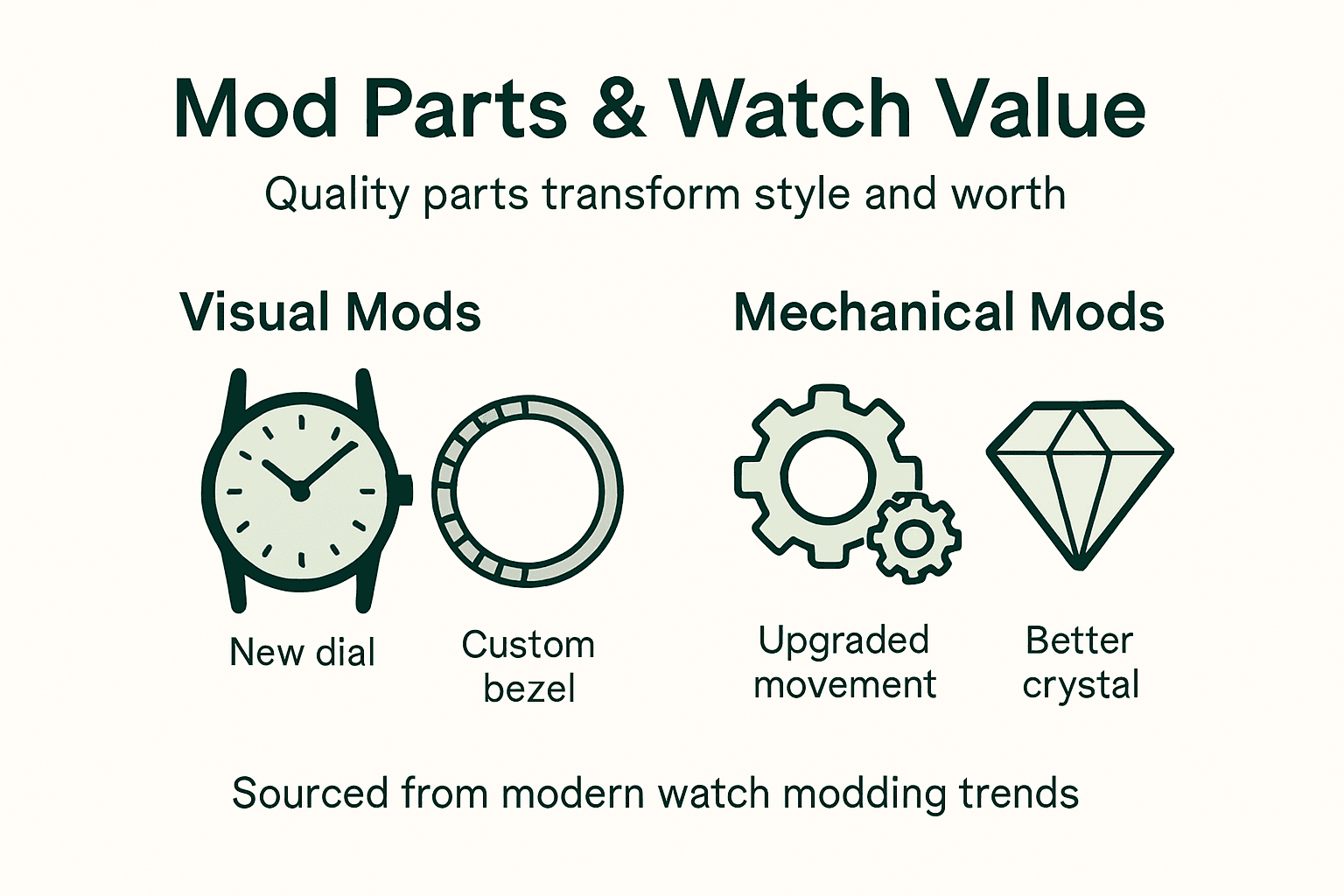
The relationship between mod parts and value is straightforward: quality components elevate your build, while poor choices diminish it. This principle applies whether you’re building for personal enjoyment or eventual resale.
Design Transformation Through Components
Mod parts are your design toolkit. A single case swap can shift your watch from sportive to elegant. A dial change rewrites the entire visual narrative.
Consider these design impacts:
- Case selection: Establishes size, material, and overall vibe
- Dial color and finish: Sets the emotional tone instantly
- Hand styling: Controls visual weight and elegance quotient
- Bezel design: Frames the dial and influences functional appearance
- Lume application: Affects readability and nighttime aesthetics
When you combine these elements strategically, you create something that looks intentional—not accidental. That intentionality shows in the final product.
Value Creation Through Quality Parts
Customization trends significantly impact watch market value, with consumers willing to pay premiums for thoughtfully modified timepieces. But value only increases when your mod parts maintain or enhance the original movement’s integrity.
Worth-building components share common traits:
- Precision fit: No gaps, no forcing, no compromises
- Quality materials: Appropriate finishes and durability
- Design coherence: Parts that speak the same design language
- Mechanical reliability: Never sacrificing function for aesthetics
A watch with excellent mod parts holds value better than one assembled randomly.
The Brand Prestige Factor
Rarity and craftsmanship drive collector appeal. Bespoke or highly refined parts increase a watch’s desirability significantly, whether vintage pieces or modern customs. Your choice of parts signals how much you care about the final result.
Strategic mod parts create watches that look and feel expensive—because quality components genuinely are valuable investments.
Long-Term Value Considerations
Think beyond your initial build. A well-chosen dial remains beautiful for years. A quality case protects and ages gracefully. Compatibility ensures future upgrades won’t require starting over.
Your investment in mod watches pays dividends when you source parts deliberately rather than impulsively.
Pro tip: Document your mod parts’ origins and specifications—tracking dial manufacturer, hand maker, and case producer increases your watch’s story value and appeal to future collectors.
Key Risks and Considerations for Modding
Watch modding carries real risks worth understanding before you start sourcing parts. Most problems are preventable—but only if you know what to watch for.
The primary risks fall into mechanical, financial, and technical categories. Understanding each helps you make informed decisions about your build.
Compare key risks associated with watch modding to better plan your custom project:
| Risk Type | Common Examples | Consequence | Prevention Tip |
|---|---|---|---|
| Mechanical | Movement damage, seal failure | Costly repairs, loss | Fit check before install |
| Financial | Wrong parts, resale loss | Wasted investment | Buy from trusted sources |
| Technical | Firmware bugs, reduced security | Watch instability | Test post-assembly |
| Authenticity | Counterfeit components | Value and credibility hit | Document origins |
Mechanical Risks
Compatibility failures top the list. Parts that don’t fit precisely damage movements, strip threads, or misalign components. A poorly fitted hand can scratch the dial. A case that doesn’t seal properly allows dust infiltration.
Common mechanical issues include:
- Movement damage: Forcing incompatible parts breaks delicate escapements
- Seal failure: Improper case assembly compromises water resistance
- Lubrication issues: Contamination from reassembly affects timekeeping
- Hand shaft damage: Incorrect hand fitting ruins the movement
These problems compound quickly. A small mistake during assembly becomes expensive once you’ve damaged irreplaceable movement components.
Financial Risks
You’re investing real money into parts that may not work together. A $150 dial sitting in your drawer because it doesn’t fit your chosen case is a pure loss.
Financial safeguards matter:
- Source from reputable suppliers who guarantee fitment
- Verify compatibility before purchasing multiple parts
- Budget for potential mistakes or upgrades
- Consider resale value when selecting expensive components
Unfortunately, mod parts rarely sell for what you paid. Plan accordingly.
Technical and Security Considerations
If your watch includes electronic components or connectivity features, modifying those elements creates new vulnerabilities. Tech wearables carry data privacy and security risks that intensify when you alter internal components.
When modifying electronic watches:
- Verify that modifications don’t compromise encryption or data security
- Understand what data your watch collects and processes
- Ensure any firmware remains stable after component changes
- Test all functions thoroughly after assembly
Knowledge prevents problems. A five-minute compatibility check saves hours of frustration and expensive mistakes.
Warranty and Authenticity Concerns
Modifying a watch voids its manufacturer warranty. You become responsible for any issues, even pre-existing ones you discover during assembly.
Authenticity matters too. Counterfeit mod parts exist. They fit poorly, fail faster, and undermine your entire build’s credibility.
Pro tip: Before committing to a major mod project, practice with inexpensive parts on a backup movement—this lets you learn assembly techniques without risking your premium base watch or costly components.
Elevate Your Watchmaking Journey with Quality Mod Parts from Ottoman Prieur
The article highlights the challenge many watch enthusiasts face when sourcing mod parts that truly fit and enhance their timepieces without risking mechanical damage or compatibility issues. If you are eager to transform your Seiko watch into a custom luxury-style piece but worry about finding parts that offer both precision fit and aesthetic impact, Ottoman Prieur can help you overcome these obstacles with confidence. We specialize in carefully curated custom watches and parts that align perfectly with your vision, whether you aim for sporty elegance or classic sophistication.
Discover collections crafted around iconic designs like the Seiko Mod Royal Oak or explore our Seiko Mod Configurator where you can design your ideal timepiece piece by piece. Every mod part is chosen to ensure mechanical reliability, design coherence, and long-term value so you can enjoy a seamless blend of style and function. Start your custom watch journey now at Ottoman Prieur and experience risk-free shopping with worldwide free shipping and a 30-day money-back guarantee.
Frequently Asked Questions
What are mod parts in watchmaking?
Mod parts are individual components or assemblies in a mechanical watch that can be swapped, upgraded, or customized without requiring a complete redesign of the movement. They allow for flexibility and personalization in watch design.
How do I know if a part is a suitable mod part?
A suitable mod part should have an interchangeable design, work independently without requiring additional modifications to the movement, improve aesthetic or mechanical performance, and adhere to standardized interfaces for compatibility.
What types of mod parts are commonly used in watch customizations?
Common mod parts include cases, dials, hands, bezels, crystals, and sometimes entire movement modules, each catering to different aspects of customization from visual style to functionality.
What risks should I consider when modding a watch?
Key risks include mechanical damage from compatibility failures, financial losses from purchasing the wrong parts, and technical issues that may arise from modifying electronic components. Proper compatibility checks and sourcing reputable parts can help mitigate these risks.