free shipping - try 30 days risk-free

How to upgrade Seiko watches for custom style in 2026

Upgrading a Seiko watch offers enthusiasts an exciting path to personalization, blending affordability with creative expression. Whether you want to replicate a luxury design or craft something entirely unique, modding transforms your timepiece into a reflection of your taste. This comprehensive guide walks you through the essential tools, quality parts, step by step procedures, and critical safety tips needed to successfully upgrade your Seiko. You’ll learn how to avoid common pitfalls, understand cost expectations, and decide when professional services make sense for your project.
Table of Contents
- Key takeaways
- Preparing to upgrade your Seiko watch
- Step by step guide to upgrading your Seiko watch
- Common challenges and how to avoid them
- Expected results and cost considerations
- Discover custom Seiko mods and expert services
- How to upgrade Seiko watches: frequently asked questions
Key Takeaways
| Point | Details |
|---|---|
| Essential tools and parts | Having the right precision screwdrivers caseback opener spring bar tools and a quality hand setter prevents damage during Seiko mods. |
| Core movements | The NH35 and NH36 automatic movements are reliable affordable cores that support a wide range of aftermarket parts. |
| Cost range | Modding costs range from budget friendly to premium builds depending on parts and services. |
| Professional guidance | Understand legal and warranty considerations before modding and know when professional services make sense. |
Preparing to upgrade your Seiko watch
Successful Seiko modding starts with gathering the right tools and understanding which components you’ll modify. Essential tools for modding include precision screwdrivers, spring bar tools, caseback openers, and more with premium tools preventing damage. Investing in quality equipment protects your watch from scratches, broken stems, and crushed components during assembly.
Your core toolkit should include precision screwdrivers in multiple sizes, a quality caseback opener for screw down and snap backs, spring bar tools for strap changes, hand pullers and setters for dial work, and a movement holder to stabilize the caliber during assembly. Optional but helpful items include a dust blower, rodico cleaning putty, crystal press, dial dots, and a loupe for inspecting small details. These tools range from $50 for basic sets to $300 for professional grade equipment.
| Tool | Purpose | Cost Range | Priority |
|---|---|---|---|
| Precision screwdriver set | Remove case screws and movement holders | $15 to $40 | Essential |
| Caseback opener | Access movement compartment | $10 to $50 | Essential |
| Spring bar tool | Change straps and bracelets | $5 to $20 | Essential |
| Hand puller and setter | Remove and install watch hands | $20 to $60 | Essential |
| Movement holder | Stabilize caliber during work | $15 to $35 | Recommended |
| Crystal press | Install sapphire or mineral crystals | $30 to $100 | Optional |
| Rodico cleaning putty | Remove dust and fingerprints | $8 to $15 | Recommended |
The NH35 and NH36 automatic movements serve as the foundation for most Seiko mods because of their reliability, affordability, and compatibility with aftermarket parts. These workhorse calibers accept a wide range of custom dials, hands, and cases designed specifically for modding projects. You’ll find aftermarket cases in styles ranging from dive watch designs to dress watch profiles, dials in countless colors and finishes, handsets matching various aesthetics, sapphire crystals for scratch resistance, and straps or bracelets to complete your vision.
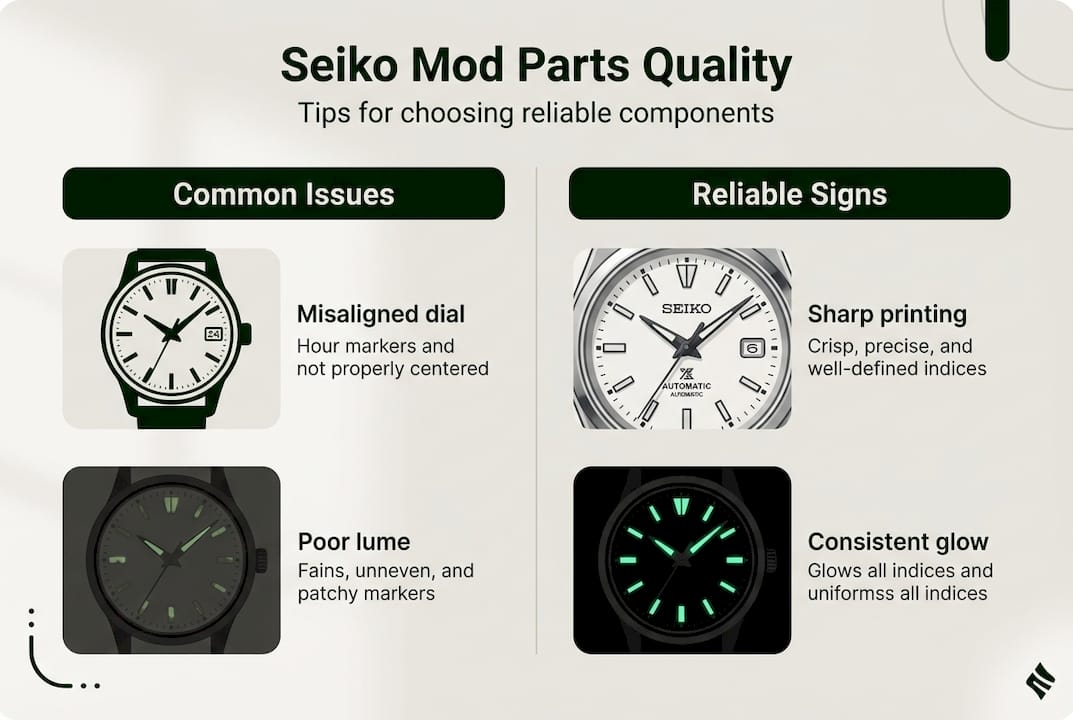
Quality matters significantly when selecting parts. Cheap dials may have misaligned printing or poor lume application, while low grade cases can have threading issues that compromise water resistance. Research suppliers carefully and read reviews from other modders before purchasing components for your Seiko watch customization guide project.
Pro Tip: Invest in a proper hand setting tool rather than improvising with tweezers or rodico alone. Damaged hands are the most common modding mistake, and a quality hand setter pays for itself by preventing costly replacements and frustrating do overs.
Work in a clean, well lit environment to minimize dust contamination. Even a single fiber on the dial creates a distracting imperfection visible every time you check the time. Organize your workspace with small containers for screws and parts, lay out tools within easy reach, and consider a parts tray with compartments to prevent mixing components from different stages of disassembly.
Step by step guide to upgrading your Seiko watch
Seiko mods typically involve replacing cases, dials, hands, bezels, crystals, and straps using NH series movements as the core. Following a systematic approach ensures you don’t miss critical steps or damage delicate components during the transformation process.
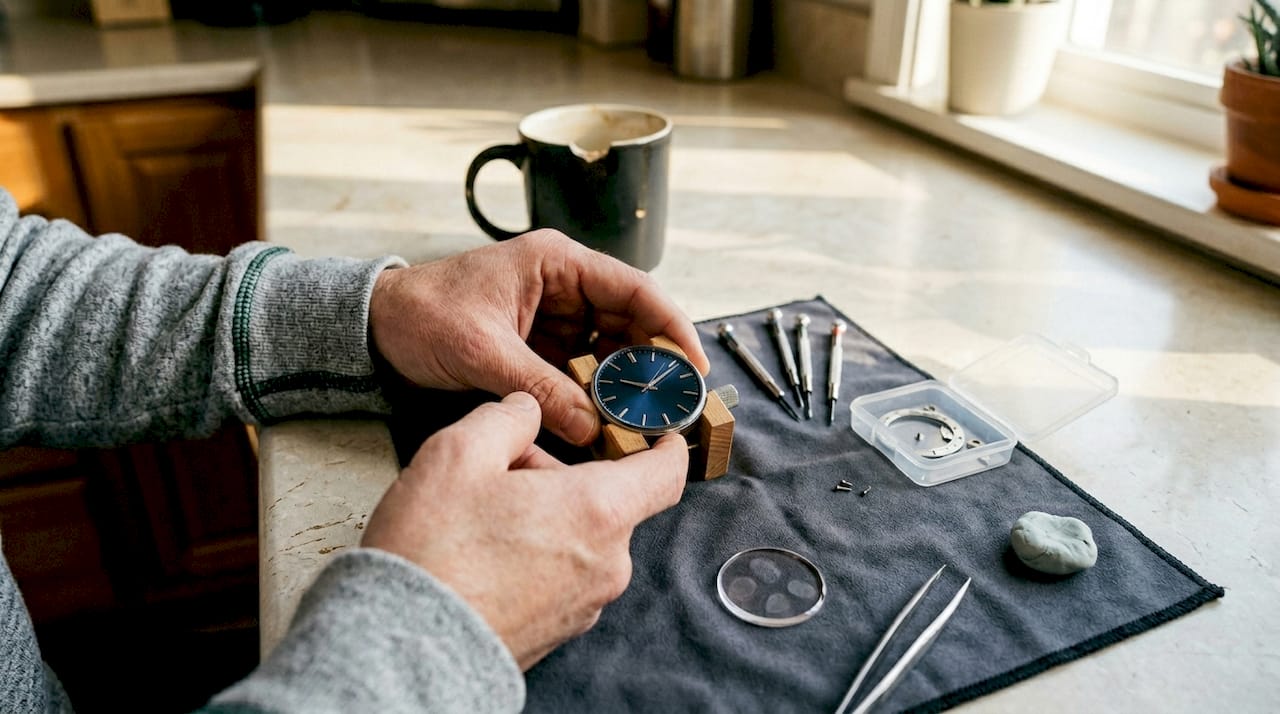
Begin by removing the bracelet or strap using your spring bar tool. Compress the spring bar while gently pulling the strap away from the lug, working carefully to avoid scratching the case. Next, open the caseback using the appropriate tool for your watch type, whether screw down, snap back, or exhibition style. Place the movement side up in your movement holder to prevent the rotor from spinning freely.
Document each step with photos on your phone. These images become invaluable references during reassembly, especially for hand positions and dial alignment. Remove the crown by locating the small release button on the movement and gently pulling the crown and stem free. This step requires a steady hand and patience to avoid bending the delicate stem.
- Remove the movement from the case by unscrewing the movement ring or spacer
- Carefully detach the hands using a hand puller, starting with the seconds hand, then minute hand, then hour hand
- Remove the dial by loosening the dial feet screws on the movement
- Install your new dial, ensuring the feet align properly with the movement holes
- Press on the new hour hand first, aligning it precisely at 12 o’clock
- Add the minute hand, checking that it clears the hour hand without touching
- Install the seconds hand last, ensuring it doesn’t drag on the dial or other hands
- Test hand clearance by manually advancing the time through a full 12 hour cycle
- Reinstall the movement into your new or modified case
- Press or screw the crystal into place, checking for proper seating
- Install the caseback, tightening evenly to maintain water resistance
- Attach your chosen strap or bracelet to complete the transformation
Handle watch hands with extreme care, as they bend easily and rarely return to perfect alignment once damaged. Use dial dots or dial adhesive sparingly to secure the dial without creating bumps that interfere with hand clearance. When pressing hands onto their respective posts, apply firm, even pressure directly downward to avoid bending.
Common assembly mistakes include:
- Forgetting to remove the plastic protective film from new crystals
- Installing hands in the wrong order or at incorrect angles
- Over tightening case screws and stripping threads
- Failing to test hand clearance before final assembly
- Contaminating the dial or movement with fingerprints or dust
After reassembly, set the time and observe the watch for 24 hours to verify proper function. Check that the date changes correctly at midnight, the hands sweep smoothly without binding, and the automatic winding rotor spins freely. If you notice any issues, disassemble and correct them immediately rather than hoping they resolve on their own.
Pro Tip: Work over a soft cloth or watch mat to catch dropped screws and protect components from hard surfaces. A single dropped screw can disappear into carpet fibers or roll under furniture, derailing your entire project until you find a replacement.
For your first mod, consider starting with simple upgrades like strap changes and bezel swaps before attempting full dial and hand replacements. This progressive approach builds skills and confidence while minimizing the risk of damaging expensive components. Many modders find that following detailed how to mod a Seiko guide resources helps them avoid beginner mistakes.
Common challenges and how to avoid them
DIY modding has risks like dust contamination and hand damage; professional builds offer safer alternatives. Understanding these challenges before starting your project helps you take preventive measures that protect your investment and ensure satisfying results.
Dust contamination ranks as the most frustrating problem for modders because it’s nearly invisible during assembly but glaringly obvious once the watch is complete. A single fiber on the dial catches light and draws your eye every time you check the time. Prevent contamination by working in a clean room away from fabric sources, using a dust blower before closing the case, handling components only by their edges, and considering a basic laminar flow hood for serious modding work.
Hand damage occurs when excessive force bends the delicate brass or steel hands during installation or removal. Once bent, hands rarely return to perfect flatness and may drag on the dial or each other. Avoid this by using proper hand setting tools designed for watch work, applying pressure straight down without lateral movement, checking clearance at multiple time positions before final assembly, and replacing hands immediately if you notice any bending.
Movement damage from dropped components, contamination, or improper handling can render your project non functional. The balance wheel is particularly vulnerable to shock and contamination. Protect your movement by working over a soft surface, never touching the balance wheel or hairspring, keeping the movement in a holder during dial and hand work, and using only appropriate tools for each task.
Seiko’s official position distinguishes between personal modding for individual use and commercial production of modified watches that might infringe trademarks. Personal modifications for your own collection generally don’t raise legal concerns, but selling modded watches with brand names or logos can create trademark issues. Additionally, any modification typically voids manufacturer warranties, so factor this into your decision making for newer watches still under coverage.
“Using the right tools and clean environments is key to avoiding irreversible damage during watch modifications.”
When modding becomes too complex or risky for your skill level, professional services offer peace of mind. Consider professional help when working with expensive vintage movements, attempting advanced modifications like movement swaps, lacking confidence in water resistance reassembly, or wanting guaranteed results for a special occasion watch. Many enthusiasts split the difference by purchasing pre assembled mod kits that require only strap installation and time setting.
Prevention strategies that protect your project:
- Test fit all parts before final assembly to catch compatibility issues early
- Keep a parts diagram or photo reference for your specific movement model
- Use appropriate lubricants sparingly on gaskets and threads
- Verify crystal diameter and thickness match your case specifications
- Double check hand clearance at all positions before closing the case
Exploring Seiko modding essentials helps you understand which components require extra attention and which offer more forgiving installation processes. Building experience with simpler mods before tackling complex projects dramatically reduces your risk of costly mistakes.
Expected results and cost considerations
Understanding the financial investment and performance outcomes helps you plan realistic modding projects that deliver satisfaction without breaking your budget. Full mod costs range from $200 to $400, much cheaper than luxury homage watches; NH35 movement commonly regulated to ±5 seconds per day. This affordability makes custom Seiko builds accessible to enthusiasts at various budget levels.
| Component | Budget Option | Mid Range Option | Premium Option |
|---|---|---|---|
| NH35 movement | $35 to $45 | $50 to $65 | $70 to $90 |
| Aftermarket case | $30 to $50 | $60 to $90 | $100 to $150 |
| Custom dial | $15 to $25 | $30 to $50 | $60 to $100 |
| Hand set | $8 to $15 | $18 to $30 | $35 to $60 |
| Sapphire crystal | $15 to $25 | $30 to $45 | $50 to $80 |
| Strap or bracelet | $20 to $40 | $50 to $100 | $120 to $250 |
| Tool kit | $50 to $80 | $100 to $150 | $200 to $350 |
A basic mod replacing only the dial and hands might cost $60 to $100 in parts, while a complete transformation with new case, movement, and all components can reach $400 or more depending on quality choices. Compare this to luxury watches costing $5,000 to $50,000, and the value proposition becomes clear for enthusiasts wanting premium aesthetics without premium prices.
Performance improvements and customization benefits include:
- Accuracy rivaling watches costing ten times more after proper regulation
- Sapphire crystals offering superior scratch resistance compared to mineral glass
- Custom dial designs unavailable from any manufacturer
- Improved water resistance through quality gaskets and proper assembly
- Enhanced lume performance with premium aftermarket dials and hands
- Unique aesthetic combinations impossible to purchase off the shelf
The NH35 movement typically runs at ±20 seconds per day out of the box, but skilled regulation can tighten this to ±5 seconds or better. This accuracy matches or exceeds many Swiss movements costing significantly more. Your modded Seiko can deliver reliable timekeeping alongside distinctive style that turns heads and starts conversations.
Budget planning should account for tools as a one time investment that serves multiple projects. Your first mod carries higher total costs because of tool acquisition, but subsequent builds only require parts expenses. Many modders find that selling completed pieces or modding for friends helps offset their tool investments while building skills.
Balancing cost and features requires honest assessment of your priorities. A daily wear watch might justify premium sapphire and a high quality bracelet, while an experimental design could use budget components to test concepts before committing to expensive parts. The Seiko watch parts guide helps you understand quality differences and make informed purchasing decisions.
Expect your first mod to take longer than anticipated as you learn techniques and troubleshoot unexpected challenges. Subsequent projects proceed much faster as muscle memory develops and you internalize best practices. The learning curve is steep initially but flattens quickly with hands on experience.
Discover custom Seiko mods and expert services
While DIY modding offers rewarding hands on experience, professionally built custom Seiko watches deliver flawless results without the learning curve or risk of damaged components. Ottoman Prieur specializes in expertly crafted Seiko Mod Store timepieces that combine premium parts with meticulous assembly, giving you luxury inspired designs at accessible prices.

Each custom build undergoes rigorous quality control and regulation to ensure accuracy and reliability. If you envision a unique design not available in the current collection, the custom watch request service brings your specific vision to life with expert craftsmanship. For collectors building mechanical watch collections, the automatic watch winder Duo Tripod keeps your timepieces wound and ready to wear.
Whether you choose to mod yourself or commission a professional build, the result is a personalized timepiece reflecting your individual style and preferences.
How to upgrade Seiko watches: frequently asked questions
Can I mod my Seiko watch without special tools?
Basic strap changes require only a simple spring bar tool, but dial, hand, and case modifications need specialized equipment to avoid damage. Attempting hand installation without proper setters almost always results in bent hands or scratched dials. The minimal tool investment protects your watch and ensures professional looking results.
Is it better to DIY mod or buy professional kits?
DIY modding offers creative control and skill development but carries risk of component damage during learning. Professional kits or custom builds eliminate assembly challenges and guarantee quality results, making them ideal for first time modders or special occasion watches. Your choice depends on whether you value the hands on experience or prefer assured outcomes.
What are the risks of modding Seiko watches myself?
Common risks include dust contamination visible on the dial, bent or damaged hands from improper installation, compromised water resistance from incorrect gasket seating, and movement damage from dropped components or contamination. Working carefully with proper tools in clean environments minimizes these risks significantly. Understanding Seiko mod watch potential helps you assess whether DIY suits your skill level.
How much does a typical Seiko full mod cost?
Complete modifications typically range from $200 to $400 depending on parts quality, with budget builds possible around $150 and premium projects reaching $600 or more. Tools add $50 to $300 as a one time investment serving multiple projects. This represents tremendous value compared to luxury watches costing thousands for similar aesthetics.
Are there parts I should avoid when modding?
Avoid extremely cheap dials with misaligned printing or poor lume quality, cases with rough threading or improper gasket channels, and hands that don’t match your movement’s post sizes. Research supplier reputations and read modder reviews before purchasing. Investing in quality core components prevents frustration and ensures your finished watch meets expectations.
Does modding void my Seiko warranty?
Yes, any modification or unauthorized service voids manufacturer warranties on new Seiko watches. Consider this carefully before modding recently purchased timepieces still under coverage. Many modders work exclusively with older watches past warranty periods or accept the trade off for personalization benefits.